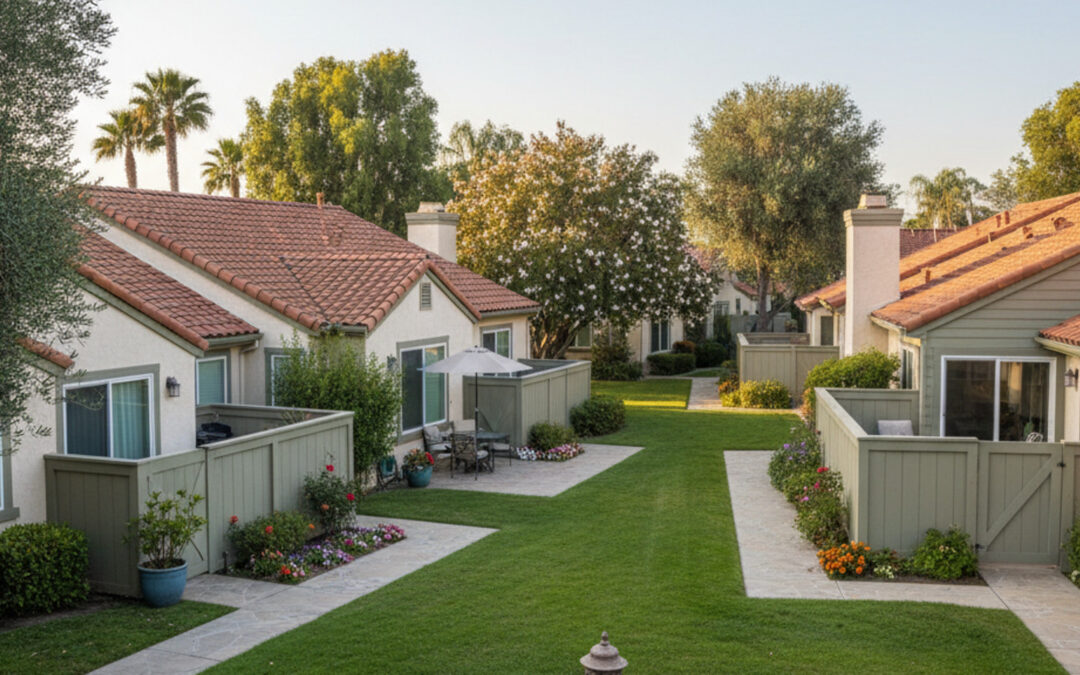
Buying your first home in Leisure Village, Camarillo, CA means buying a resale home in a gated, age-qualified 55+ HOA community, where the Association’s documents and rules are part of the purchase alongside the loan, the inspection and escrow. Every home here is single-story, and buying a home in Leisure Village, CA also makes you a member of the Association that runs the gates, grounds and shared facilities.
Key Takeaway
Buying your first home in Leisure Village, Camarillo means meeting the Association’s age-occupancy rule and getting pre-approved with the HOA dues counted against your income. You then read the HOA documents and inspect the home before the contingency deadline in your purchase contract. The documents and the maintenance split deserve as much of your attention as the house.
Who This Guide Is For
It is written for first-time buyers purchasing a resale home in Leisure Village, Camarillo, including long-time renters 55 and older and family members helping a parent buy.
Related guides: Homebuyer programs in Leisure Village Camarillo, Types of homes in Leisure Village Camarillo.
Leisure Village First-Time Buying at a Glance
- One resident 55 or older; other residents must meet state rules.
- Request HOA documents within 3 days; review ends at day 17.
- Association covers roof, exterior paint, front landscaping; owner pays termite work.
- Lenders count dues in debt-to-income; FHA and VA need lender confirmation.
- Camarillo tax rate is about 1.13%; supplemental bills follow closing.
What First-Time Buyers Should Know Before Searching
Besides the age rule, a Leisure Village purchase adds three layers to a standard house purchase:
- Mandatory membership: Membership comes with monthly dues.
- Limits on outside changes: The recorded CC&Rs limit what an owner can change outside the home.
- Ownership type: This shapes what you own, insure and finance. Leisure Village is a planned unit development (PUD) governed by an elected Board of Directors. A condominium owner typically owns only the interior airspace. A PUD owner generally holds fee title to both the home and the lot under it, subject to the CC&Rs.
Owning a home years ago does not rule you out. HUD defines a first-time homebuyer as someone with no ownership interest in a property in the three years before the FHA case number is assigned. That includes a divorced or legally separated buyer whose only ownership of a principal residence in that period was jointly with a spouse.
Current prices and recent sales in the community change month to month, so check them before you set a price range. Drive the routes from the gate to your doctor, shops and the freeway at the hours you would use them before you commit. Then compare the floor plans by size and layout: attached homes share a wall but keep private patios, and most are two-bedroom, two-bath models, with larger three-bedroom options.
Who Can Buy in Leisure Village: 55+ Eligibility Rules
A first-time buyer can purchase here on the same terms as anyone else. The Association’s test is who will live in the home, not whether you have owned before.
Leisure Village’s rules require at least one resident of every home to be a “permissible occupant,” meaning a person 55 or older, and the Association states it strictly enforces this policy. To verify age, the Association copies one government document showing date of birth for the resident’s file, such as a driver’s license, birth certificate or baptismal certificate.
The rule applies to occupancy, so a buyer under 55 can generally hold title as long as a parent or other person 55 or older lives in the home as the qualifying occupant. Confirm that arrangement with the Association office before you write an offer.
Under California Civil Code §51.3, which governs senior citizen housing developments such as Leisure Village, each other permanent resident must fit one of these categories:
- Qualified permanent resident: This is generally someone 45 or older. It also covers the qualifying resident’s spouse or cohabitant, a person providing their primary physical or economic support, or a disabled child or grandchild.
- Permitted health care resident: This is a caregiver providing live-in, long-term or hospice care for compensation, with no age requirement.
A household that does not fit these categories cannot occupy the home under the rules, even if the purchase closes.
Step-by-Step: Buying Your First Home in Leisure Village
Several deadlines start the day your offer is accepted, so the order of these steps matters.
- Set a monthly budget: Build it on the full monthly cost in the budgeting section below, not the mortgage alone.
- Get pre-approved: A pre-approval means the lender has checked your income, assets and credit, which tells sellers your offer can close. A prequalification based on figures you report yourself does not carry the same weight.
- Sign a buyer agreement with your agent: California Civil Code §1670.50 has been in effect since January 1, 2025. It requires a written buyer-broker agreement covering compensation, services, timing of payment and termination, signed no later than your offer. National Association of Realtors MLS rules in place since August 17, 2024 require the agreement before an agent tours a home with you, in person or by live virtual tour. Expect to sign before the first showing.
- Tour homes: Your agent arranges the advance gate clearance each showing needs.
- Make an offer: Include inspection, loan, appraisal and HOA-document contingencies, plus an earnest money deposit. If you back out after removing contingencies, the seller may keep some or all of the deposit under the contract’s liquidated damages terms. Remove contingencies only once your reviews are done.
- Open escrow: Escrow holds your deposit and the documents until closing.
- Review the HOA documents: Request and read them inside the review period covered in the next section.
- Order inspections: Schedule the general, pest and sewer inspections in the first days of escrow, using the checklist in Home Inspections for Older Leisure Village Homes.
- Do the final walkthrough: Confirm agreed repairs are done and the home is in the condition you agreed to buy.
- Close: Sign the loan and escrow documents and fund your down payment and closing costs. Escrow then records the deed in your name.
HOA Documents and Maintenance Responsibilities to Review
California Civil Code §4525 requires the seller to give you the Association’s records as soon as practicable before title transfers. Section 4530 requires them to be supplied within 10 days of a written request.
Under the current C.A.R. residential purchase agreement, you have 3 days after acceptance to request them. Their review falls under the investigation contingency, which you remove within 17 days of acceptance unless both sides agree in writing to a different number.
What arrives, and what to look for:
- Governing documents: These are the CC&Rs, articles of incorporation, bylaws and age restrictions. Check the occupancy, leasing, pet and exterior-change rules against your plans.
- Meeting minutes: You get the most recent 12 months. Look for repeated repairs, planned projects and talk of dues increases.
- Budget and reserves: This covers the Annual Budget Report, the Assessment and Reserve Funding Disclosure Summary, and where reserve funds are held. Compare reserve funding against planned work, since thin reserves can mean special assessments or dues increases later.
- Financial statement and assessments: This lists current regular and special assessments, the transfer fee and any unpaid assessments on the home you are buying.
- Insurance and claims: This includes the Multipurpose Statement of Insurance and any pending or anticipated litigation involving the Association.
Who fixes what, per the Association’s published responsibility matrix:
- Association:
- roof maintenance, repair and replacement
- exterior painting
- most front and common landscaping
- original gutters and stoops, unless owner-modified
- the water line from the meter to the backflow shutoff valve
- the sewer lateral from the outside wall to the main, unless the owner caused the stoppage
- Owner: You pay for termite and wood-destroying pest eradication and the resulting wood damage, which the dues do not cover. Water heaters and HVAC equipment are typically the owner’s responsibility in HOAs; confirm for the home you are buying.
Three rules to read before you write an offer:
- Leasing: The Association’s FAQ lists a one-year minimum and two-year maximum lease. Its current Rules & Regulations are reported to set:
- a 30-day minimum lease, with no short-term rentals
- a 25% rental cap, adopted January 3, 2022
- a written lease the Association must receive before a tenancy is valid
Confirm the current term with the Association office.
- Pets: Up to two pets per household are allowed, with no stated breed restriction. Pets must be leashed outdoors, and owners must pick up after them.
- Exterior changes: Read the architectural rules in the CC&Rs before you plan any outside work. Ask the Association office what needs approval, including solar panels or an EV charger.
If the home needs updating, price the remodel and check its approval path before you remove contingencies.
Budgeting for HOA Dues and Other Monthly Costs
Your real monthly cost is the mortgage payment plus:
- HOA dues
- property tax
- your own insurance policy (see the insurance FAQ)
- any utilities the dues do not cover
Dues pay for:
- water, sewer and trash
- cable and internet
- exterior maintenance and landscaping
- the master insurance policy
- the 24-hour staffed gate
- the shared golf course, pool and fitness facilities
Dues vary by home size, so get the current figure for the specific home from its assessment statement.
Property tax starts with California’s 1% Proposition 13 base rate plus voter-approved bonds and assessments. That puts Camarillo’s effective rate at roughly 1.1% to 1.3% of assessed value. One compilation of Board of Equalization data put the Camarillo composite rate at 1.13% for tax year 2025, payable 2026.
After closing, the Assessor reassesses the home at its purchase price. The Ventura County Tax Collector then mails a separate supplemental tax bill for the difference between the old and new values for the rest of the fiscal year. That bill typically takes six months to a year to arrive. A purchase between January 1 and June 30 produces two supplemental bills, one for each fiscal year affected. Set money aside for it from closing day.
Home Inspections for Older Leisure Village Homes
You can waive an inspection, but you shouldn’t in a community built between 1973 and 1984. A full inspection inside the investigation contingency is your chance to find problems before you are committed.
What to have checked:
- Roof and exterior: Note issues even where the Association handles the repair under the maintenance split above. Ask the Association whether work is scheduled.
- Plumbing: Include a camera scope of the sewer line, since part of it is your responsibility.
- Electrical panel: Check its condition and capacity, especially after past remodels.
- HVAC and water heater: Record their ages so you can budget for replacements.
- Wood-destroying pest report: The report sorts findings into two sections:
- Section I items show visible evidence of active infestation or infection, or conditions resulting from it.
- Section II items are conditions likely to lead to infestation but showing no visible evidence of it at the time of inspection.
Who pays for each is negotiated in the offer.
- Permit history: Request past approved plans and permits from the City of Camarillo Building & Safety Division, or look records up on the City’s OpenGov permitting portal, in use since July 1, 2025.
Homes built from 1973 through 1977 predate 1978. For those homes, the federal lead-based paint rule gives you a 10-day period to arrange a lead inspection or risk assessment before you are bound by the contract, unless both parties agree in writing to a different period.
Securing Financing for Your Purchase
The lender counts your monthly HOA dues in your debt-to-income ratio, so higher dues lower the loan amount you qualify for. The lender also reviews the Association through an HOA questionnaire or certification, and the PUD ownership type described earlier shapes that review.
Loan types to ask a lender about:
- Conventional: The 2026 baseline conforming loan limit for a one-unit home is $832,750, up from $806,500 in 2025.
- FHA and VA: Leisure Village does not appear on HUD’s FHA-approved condominium list or the VA-approved condo listing for Camarillo. The City of Camarillo’s Housing Element describes it as 2,136 single-family attached units, consistent with its PUD ownership, so condo-project approval may not apply. Classification can vary by phase, so have your lender confirm eligibility for the specific home.
- HECM for Purchase: This FHA-insured reverse mortgage requires the youngest borrower on title, or an eligible non-borrowing spouse, to be at least 62. You bring a one-time down payment, commonly cited at roughly 40% to 65% of the price depending on age and interest rates. You make no monthly mortgage payments afterward.
Rates move daily, so compare current interest rates from at least two lenders on the same day. Before you tour, estimate how much house you can afford with the dues included. First-time buyers may qualify for down payment assistance in Ventura County, though income limits and funding change often. Plan for closing costs as well, which are due at signing on top of your down payment.
Common First-Time Buyer Mistakes in a 55+ Community
Each of these mistakes costs money or the deal itself.
- Letting the document review lapse: Once the review window above passes, problems in the minutes or budget become yours to live with.
- Budgeting only the mortgage: Dues, property tax, insurance and the supplemental bill can stretch a payment you qualified for.
- Skipping the house rules: A rental plan, a third pet or work on the yard or exterior can conflict with the rules above once you own the home.
- Waiving the inspection or pest report: Section I repairs and hidden plumbing problems then fall on you after closing.
- Assuming any loan works: An FHA or VA plan that does not fit the community can stall an accepted offer.
Contact We Sell Leisure Village to start the search for your first home inside the gate.
Frequently Asked Questions
Where Can I Find Honest Reviews of Leisure Village Before I Buy?
Online reviews are scattered and mostly about lifestyle. For a more reliable picture, visit at different times of day, ask a few current residents what works well and what frustrates them, and ask the Association office about pending projects or assessments.
How Do I See Leisure Village Homes for Sale Inside the Gate?
Listings appear on the MLS. Your agent arranges showings after the listing agent and homeowner submit the required forms to the Association Office, and every visitor must be pre-cleared by name at the gate. Freestanding open-house signs are reportedly not permitted on Association property.
Do I Need My Own Homeowners Insurance If the HOA Has a Master Policy?
Yes. The master policy is described as covering exteriors and common areas, with owners advised to carry their own HO-6 policy for the interior, contents and liability, so confirm the split with the Association office. Your lender will require proof of your own policy before closing.
How Long Does It Take to Buy a Home in Leisure Village?
The escrow period is set in your purchase contract, so agree on a timeline with the seller that fits your lender’s schedule. Your HOA document review and inspections must be finished within the investigation contingency, which runs inside that period.
Sources
- Leisure Village Information (Planned-Unit Development)
- HUD: How Does HUD Define a First-Time Homebuyer?
- Leisure Village Age Requirement
- California AB 2503 and Civil Code §51.3
- California Civil Code §1670.50
- California Civil Code §4525
- C.A.R. Residential Purchase Agreement
- Leisure Village HOA Responsibility Matrix
- Leisure Village Common Questions (Leasing and Pets)
- Camarillo Property Tax
- Ventura County Treasurer-Tax Collector FAQs
- Leisure Village Life
- The Standardized Inspection Report
- City of Camarillo Community Development Applications
- 40 CFR §745.110: Opportunity to Conduct an Evaluation
- FHFA 2026 Conforming Loan Limits
- City of Camarillo Housing Element
- HECM for Purchase
- Leisure Village Association Forms