Updated on: October 29, 2026
by Meryll | Apr 24, 2026 | blog
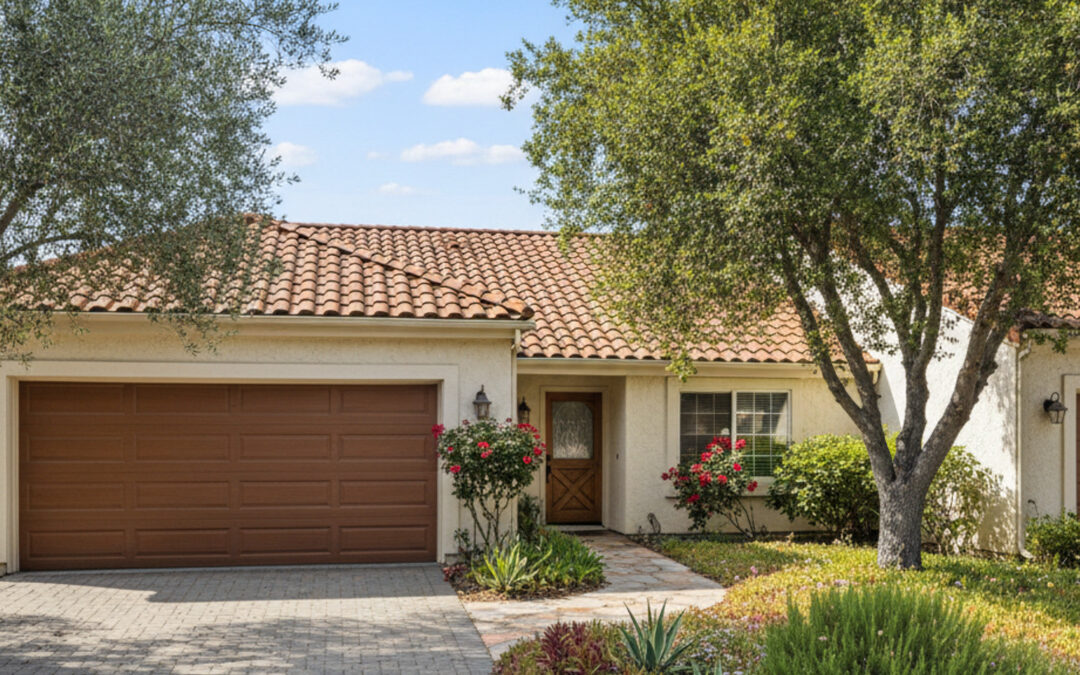
Ventura County bills property taxes on a Leisure Village home in Camarillo each year.
Key takeaway
A Leisure Village tax bill is your total tax rate applied to your purchase price, plus any direct assessments on the parcel. Expect a supplemental bill soon after you buy. Owners 55 and over who sell a California home can often keep their old, lower tax base through Prop 19 if they file within its window. If the replacement home costs more, the difference in market value is added to your transferred taxable value, so budget for a bill somewhat higher than your old one, though well below a full reassessment at the purchase price.
Who this guide is for
This guide is for buyers budgeting for a Leisure Village home and for current owners aged 55 and over who want to understand, lower or plan for their Ventura County property tax bill.
Leisure Village property taxes at a glance
- General levy: 1% of assessed value, plus voter-approved bond rates.
- Assessed value rises no more than 2% a year.
- Installments go delinquent after December 10 and April 10, with a 10% penalty.
- Prop 19: buy within two years before or after selling, and file form BOE-19-B.
- Homeowners’ exemption: $7,000 off assessed value; claim by February 15.
How property taxes work in Leisure Village Camarillo
Proposition 13 sets the framework for property taxes on all California real estate. It added Article XIII A to the California Constitution in 1978, limiting the general property tax rate to 1% of full cash value. When you buy, your assessed value starts at the purchase price on the date ownership changes.
Your yearly tax has two parts:
- The general levy.
- The voter-approved bond rates for the tax rate area your parcel sits in.
Both are applied to the assessed value, and together they make up your total tax rate. The bond portion is set each fiscal year, so ask for the current total for your specific parcel.
After you buy, your assessed value can rise by no more than 2% per year, even if market value is increasing faster. This holds as long as ownership does not change and no new construction occurs.
The Ventura County Assessor sets the assessed value, and the Treasurer-Tax Collector sends the bill and collects payment.
The seller’s current bill tells a buyer little about future costs. A longtime owner’s base may reflect a purchase price from decades ago, and that base resets to your price at sale. Ask your real estate agent for a parcel-specific estimate before you make an offer.
How to estimate property tax on a Leisure Village home
You can build a working estimate in five steps:
- Start with the price: use your purchase price.
- Subtract the exemption: if this will be your primary home, take off the homeowners’ exemption described under property tax relief.
- Apply the rate: multiply by your parcel’s total tax rate.
- Add direct charges: include the parcel’s direct assessments, covered in the supplemental bills section.
- Find the monthly figure: divide by 12.
Here is an illustration only, not a market figure. Take a $650,000 price for a primary residence:
- Subtracting the homeowners’ exemption leaves $643,000.
- The general levy on that is $6,430 a year, or about $536 a month.
- The parcel’s voter-approved bond rates and direct assessments are added on top, so the final bill will be higher than the general levy alone.
Run the steps on a real list price from current Leisure Village home prices. Then add HOA dues, insurance and utilities to the monthly tax figure to compare the full monthly cost with what you spend today.
At closing, escrow prorates the current year’s taxes between buyer and seller, and that proration is part of your buyer closing costs.
Supplemental tax bills and special assessments after you buy
When a property changes ownership in Ventura County, the Assessor reassesses it to current market value. The county then issues a supplemental tax bill for the difference between the prior assessed value and your new value. The bill is prorated from the date of the ownership change through the end of the fiscal year (July 1 to June 30).
Timing depends on your closing date:
- January 1 to June 30: you receive two supplemental bills, because the regular roll is based on a January 1 lien date.
- July 1 to December 31: you generally receive one.
Each supplemental bill can be paid in two installments, with its own due dates printed on the bill.
Three practical points apply:
- You pay it directly: the supplemental bill goes to the owner, not the lender, so buyers with an impound account still pay it themselves.
- It can be a credit: if your new value is lower than the old one, you may receive a refund.
- First-year gap: your regular annual bill does not yet reflect your new value in the first year.
Beyond the ad valorem tax, a bill can list direct charges such as:
- Voter-approved parcel taxes.
- Special district fees.
- Any Mello-Roos or Community Facilities District levy.
These vary by parcel, so look up your own parcel’s bill on the county’s online lookup before you buy. If you are weighing a Leisure Village home against one in newer housing developments, compare the direct charges on both bills.
When Leisure Village property taxes are due
Ventura County’s secured property tax year runs July 1 to June 30, and the Tax Collector mails annual bills on or before November 1.
- First installment: due November 1, delinquent after December 10, with a 10% penalty.
- Second installment: due February 1, delinquent after April 10, with the same penalty plus a cost charge.
- Default: if both installments remain unpaid by June 30, the taxes go into default and add monthly penalties.
If you have a mortgage with an impound account, your lender pays the annual bill from that account. If you paid cash or paid off your mortgage, you pay the county directly and need to track these dates yourself.
You remain responsible for the tax even if a bill never reaches you. Contact the Treasurer-Tax Collector if one has not arrived by mid-November.
Using Prop 19 to transfer your property tax base
Proposition 19, codified at Revenue and Taxation Code section 69.6, lets homeowners aged 55 and older carry the taxable value of their current home to a replacement home. It can make a large difference for longtime owners who downsize into a smaller property in Leisure Village.
- Who qualifies: the home you sell must have been your principal residence and eligible for the homeowners’ or disabled veterans’ exemption, and the Leisure Village home must become your principal residence. The original home can be anywhere in California.
- The window: you must buy or build the replacement home within two years before or after selling the original. Because the window runs in both directions, you can close on the Leisure Village home before your old home sells, or sell first and take up to two years to buy.
- Price differences: if the Leisure Village home’s market value is equal to or lower than the home you sold, you keep your old taxable value. If it is higher, only the difference is added to the transferred value, so you avoid a full reassessment.
- How often: you can use the transfer up to three times in your lifetime.
- The claim: file form BOE-19-B with the Ventura County Assessor after both the sale and purchase have closed and you are living in the new home. File within three years of buying or building the replacement home. A later claim still works, but relief starts only from the year you file.
If you skip the claim, the new home is taxed at its full purchase price until a valid claim is filed.
Property tax relief for seniors and homeowners
Several programs can lower or delay a Leisure Village tax bill.
- Homeowners’ exemption: this cuts $7,000 from the assessed value of an owner-occupied principal residence, roughly $70 a year in tax.
- You must own and live in the home as of the January 1 lien date, and it applies only to a primary residence.
- File the one-time claim, form BOE-266, with the Ventura County Assessor by February 15 for the full exemption. A late claim filed by December 10 secures 80%.
- It renews automatically while you remain eligible.
- Property Tax Postponement: the State Controller’s program lets you defer taxes as a lien against the home. For 2026-27, you must:
- be 62 or older, blind or disabled;
- own and live in the home;
- have 2025 household income of $57,002 or less;
- hold at least 40% equity;
- have no reverse mortgage.
Applications are processed in order from October 1, 2026, with a final deadline of February 10, 2027. Postponed amounts accrue 5% simple interest and are repaid when you move, sell or pass away.
- Disabled veterans’ exemption: for the 2026 lien date, there are two tiers. Apply for either with the Ventura County Assessor.
- The basic exemption takes $180,671 off a qualifying veteran’s principal residence, with no income limit and a one-time filing.
- A low-income tier of $271,009 applies when household income is $81,131 or less, and it must be re-filed each year.
- Parcel-tax exemptions: if your bill lists a voter-approved parcel tax, call the agency named beside it. Ask whether it offers a senior exemption and how to apply.
Frequently asked questions
How much property tax would I pay on a $1,000,000 home in Leisure Village Camarillo?
Subtracting the homeowners’ exemption leaves $993,000. The general levy on that is $9,930 a year, or about $828 a month, before your parcel’s bond rates and direct charges.
What is the sales tax in Camarillo, CA?
The California Department of Tax and Fee Administration lists Camarillo’s combined sales and use tax rate at 7.250%, effective January 1 through March 31, 2026. That is the statewide base with no local district add-on. The home itself is not subject to sales tax; the one-time documentary transfer tax at sale is part of seller closing costs.
Will my property tax bill go down if Leisure Village home values drop?
Only if your own home’s market value on the January 1 lien date falls below its assessed value. In that case you can ask the Ventura County Assessor for a temporary decline-in-value reduction, which mainly helps recent buyers and can be restored as prices recover, though never above your Prop 13 limit. If you disagree with the Assessor’s review, you can file an assessment appeal.
Does putting my Leisure Village home in a living trust or adding my spouse to title raise my property taxes?
No. Transfers between spouses are excluded from reassessment under Revenue and Taxation Code section 63, and transfers into a revocable trust are excluded under section 62(d), with no separate claim form for either. Complete a Preliminary Change of Ownership Report, which you can file with the deed at the Ventura County Recorder, and check the box for a transfer between spouses or into a revocable trust so the Assessor applies the exclusion.
Do I have to pay Mello-Roos taxes in Leisure Village Camarillo?
A Mello-Roos or Community Facilities District levy would appear as a direct charge on your parcel’s annual bill, so check the specific parcel’s direct charges before you buy.
Can I use Prop 19 if my new Leisure Village home costs more than my old home?
Yes. The Assessor adds the exact difference in market value to your original base year value. This protects your monthly budget from the steep tax penalty of a full reassessment.
Do Leisure Village HOA dues cover my property taxes?
No. Leisure Village HOA fees pay for association services, not your annual Ventura County property tax bill, so budget for the two separately as part of your overall cost of living in the community.
Sources
- California Constitution, Article XIII A (Proposition 13)
- Ventura County Treasurer-Tax Collector: Tax Collector FAQs
- Ventura County Treasurer-Tax Collector: Secured Taxes
- Revenue and Taxation Code section 69.6 (Proposition 19)
- California State Board of Equalization: Homeowners’ Exemption
- California State Controller: 2026-27 Property Tax Postponement Application
- Revenue and Taxation Code section 205.5 (Disabled Veterans’ Exemption)
- CDTFA: California City and County Sales and Use Tax Rates, January to March 2026
- Revenue and Taxation Code section 63 (interspousal transfers)
- Revenue and Taxation Code section 62 (trust transfers)
- Revenue and Taxation Code section 480.3 (Preliminary Change of Ownership Report)
For more on this topic, see: Camarillo vs Simi Valley CA: Comparing Ventura County Real Estate in 2026.
For more on this topic, see: The 2026 Guide to Ventura County Real Estate: Camarillo vs Ventura CA.
For more on this topic, see: Camarillo vs Thousand Oaks CA: Choosing Your Ventura County Home in 2026.
For more on this topic, see: Comparing Leisure Village vs Hueneme Bay, Port Hueneme, CA in 2026.
For more on this topic, see: Leisure Village Camarillo vs Rossmoor Walnut Creek: HOA Fees, Cost of Living and Homes Compared.
For more on this topic, see: Choosing Your 2026 Active Adult Home: Leisure Village Camarillo vs Laguna Woods Village CA.
For more on this topic, see: Moving to Ventura County: Leisure Village vs The Springs, Camarillo, CA in 2026.
For more on this topic, see: The History of Leisure Village, CA: What 2026 Buyers Should Know.