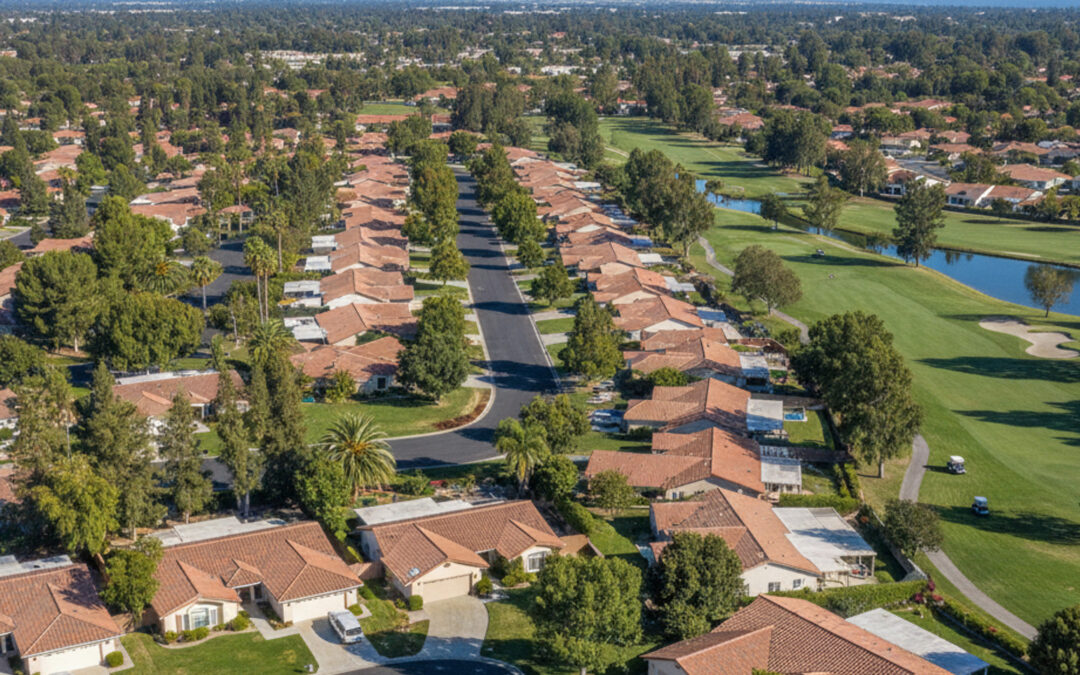
Leisure Village, in Camarillo, CA, has a mild Mediterranean-type coastal climate:
- cool winters that bring most of the year’s rain;
- dry summers that start under morning marine clouds;
- a warm, windy fall.
The weather and climate in Leisure Village shapes home upkeep, insurance and outdoor plans as much as daily comfort.
Key Takeaway
Leisure Village has mild coastal weather. Most rain falls in the winter months, and summers are dry with gray marine-layer mornings. The hottest, driest and most fire-prone days come in late summer and fall, often when Santa Ana winds blow. For a buyer, the weather checks that matter are the home’s fire hazard zone, flood zone and insurance, not snow or hard freezes.
Who This Guide Is For
This guide is for buyers and new residents who want to know two things: what Leisure Village’s weather is like through the year, and which weather risks to check before buying.
Leisure Village Weather at a Glance
- Temperatures: mild all year, with cool nights and warm afternoons.
- Wet season: December through March, with dry spells between storms.
- May and June mornings: often start gray, clearing by afternoon.
- Santa Ana season: fall and winter; confirm the address’s fire zone.
- Hottest stretch: late summer into early fall, peaking on offshore-wind days.
What Shapes the Weather in Leisure Village
Leisure Village sits on the inland edge of the Oxnard Plain, about nine miles from the Pacific Ocean, with hills rising to the north and east. Cool ocean air moderates temperatures for most of the year, which keeps summers milder here than in the inland valleys.
Three drivers set the seasons:
- Marine layer (late spring and early summer): cool, cloudy ocean air pushes inland overnight and in the morning.
- Pacific storms (winter): these bring most of the year’s rain.
- Santa Ana winds (fall and winter): these offshore winds reverse the usual sea breeze.
Camarillo Weather by Month: Temperature and Rainfall
For exact monthly averages, NOAA’s National Centers for Environmental Information publishes official 1991-2020 climate normals for the nearest station. They cover high temperature, low temperature and precipitation. By season, the normals translate into day-to-day weather like this:
- Winter (December to February): Cool days, often sunny between storms, the coldest nights of the year and the bulk of the rain.
- Spring (March to May): Rain tapers off after March, temperatures climb slowly, and gray mornings become more common by May.
- Summer (June to August): Dry, with cool, cloudy starts early in the season and warm afternoons; rain is rare.
- Fall (September to November): Often brings the hottest days of the year, with Santa Ana wind days and the first storms arriving late in the season.
Normals are 30-year averages, so any single month can run well above or below them. To see how a recent month or season turned out, check the monthly climate summaries from NOAA or the National Weather Service, or a local weather station’s monthly records.
Cold nights are the main winter concern. On the coldest clear, calm nights, temperatures fall well below daytime levels. Covering frost-tender plants and wrapping exposed outdoor pipes on those nights is an inexpensive precaution.
Marine Layer, May Gray and June Gloom
In late spring and early summer, a layer of cool, moist ocean air settles over the coast. It brings low gray clouds and sometimes light drizzle overnight and in the morning. By midday or afternoon the clouds usually burn back toward the coast, and they often return in the evening. Late-summer mornings tend to be clearer.
Because Leisure Village sits inland from the beaches, the clouds tend to clear earlier there than at the shore, and afternoons run warmer. On some days the layer holds all day and the sun never fully breaks through.
This pattern explains why early-summer mornings can feel cooler than the monthly averages suggest: the averages blend a cool, gray morning with a warm, clear afternoon.
The Rainy Season and Winter Storms
The wet season runs from December through March, and those months bring most of the year’s rain. Totals swing widely from one year to the next. A season can bring a run of soaking storms or only a few light ones, so a single dry winter says little about the next. Rain is counted by season, which spans the new year, rather than by calendar year. To judge whether a winter is running wet or dry, compare the season-to-date total with normal on a seasonal rain summary.
The heaviest rain often comes from atmospheric rivers: long plumes of Pacific moisture that can deliver heavy rain and gusty wind over a day or two. They often arrive after long dry spells, when hard, dry ground sheds water quickly.
Steps worth taking before and after you buy:
- Before the season: Clear gutters, downspouts and patio drains in the fall.
- During the inspection: Look at where water flows around the home, including slopes toward the foundation and any low patio areas.
- With the HOA: Ask which drainage the association maintains and which the owner is responsible for.
- Flood zone: Look up the address on the FEMA Flood Map Service Center. The flood zone designation affects whether a lender requires flood insurance.
Santa Ana Winds and Fire Weather
Santa Ana winds are dry offshore winds that blow from the interior toward the coast and warm as they descend toward sea level. They feel hot, very dry and gusty, sometimes carrying dust, and they occur in fall and winter. Strong wind and low humidity together create critical fire conditions. When that happens, the National Weather Service issues a Red Flag Warning.
Three major wildfires have burned in or near Camarillo since 2017, according to CAL FIRE data cited in the City of Camarillo’s Safety Element:
- Thomas Fire (December 2017): burned 281,893 acres in Ventura and Santa Barbara counties, though Camarillo itself had no structural damage.
- Hill/Woolsey Fire (November 2018): started in the Camarillo area and burned 4,531 acres, including Camarillo Grove Park.
- Mountain Fire (November 2024): broke out near Camarillo and grew from under half a square mile to over 22 square miles within a day. It threatened about 3,500 structures in suburban neighborhoods, ranches and agricultural areas around the city.
To check a specific address, look it up on the CAL FIRE Fire Hazard Severity Zone map and Ventura County’s hazard maps. Then act on it:
- Insurance: Get homeowners insurance quotes early in escrow, since coverage availability is tied to fire risk. The California FAIR Plan is the fallback when private insurers decline.
- Alerts: Sign up for VC Alert, Ventura County’s official emergency notification system, at vcalert.org. It is sponsored through the Ventura County Sheriff’s Office and 10 cities.
- Power shutoffs: Southern California Edison may shut off power to some neighborhoods during dangerous wind conditions. Check status at sce.com/PSPS or the SCE outage map, and see vcemergency.com for affected areas.
- Smoke: Fires that spread on Santa Ana winds can send smoke over town even when the flames stay outside the city. On those days, check air quality on AirNow and limit time outdoors when it is poor.
Heat Waves and the Warmest Months
The hottest month in Camarillo comes in late summer or early fall, not midsummer. The hottest days usually come when offshore winds shut off the cooling sea breeze, so a fall day can be hotter than any in July.
The National Weather Service issues Heat Advisories and Excessive Heat Warnings. During heat advisories, the City of Camarillo uses the Camarillo Public Library at 4101 Las Posas Road as its local cooling center. It directs residents to VCEmergency.com for additional countywide locations. The National Weather Service heat safety page explains how to recognize heat illness and keep a home cool when the power is on or off.
How the Weather Shapes Daily Life
Outdoor plans work best when they follow the patterns above:
- Hot late-summer and fall days: mornings and evenings are the comfortable hours.
- Red Flag and Santa Ana days: take care with mowers, grills and open flames.
- Winter: plan outdoor time for the dry spells between storms.
The golf course and pool at this 55+ community follow the same rhythm: early tee times and evening swims on hot days. In May and June, plan beach trips and other area outings for the afternoon, after the coastal clouds clear. Cooling on hot days and heating on cold nights show up in utility bills, which sit alongside monthly HOA dues in a household budget.
Where to Check Current Camarillo Weather
For current conditions and forecasts:
- NWS Los Angeles/Oxnard: This is the forecast office that covers Camarillo and Ventura County. Use its point forecast for Camarillo for the coming days, including the weekend. Its Area Forecast Discussion explains the reasoning behind the forecast.
- NWS alerts: Red Flag Warnings, heat products, and flood watches and warnings.
- Radar and satellite: Track incoming storms and the marine-layer clouds as they move in or clear.
- NOAA Climate Prediction Center: Outlooks for whether the coming weeks and season lean warmer, cooler, wetter or drier than normal.
- AirNow: Air quality and the UV index.
- Personal weather stations: Neighborhood readings of temperature, wind and rain.
Frequently Asked Questions About Camarillo Weather
Does Camarillo Have the Best Weather in California?
“Best” depends on preference. Camarillo gets more afternoon sun than the immediate coast during the marine-layer season and milder summers than the inland valleys, at the cost of fall heat spells and Santa Ana fire weather.
Are There Freezing Temperatures or Snow in Leisure Village?
Snow is not part of the normal pattern on the Oxnard Plain, though cold storms can whiten the higher peaks in view. On the coldest clear winter nights, the plant and pipe precautions above apply.
Do You Need Air Conditioning in Leisure Village?
Marine air keeps many summer days comfortable, but late-summer and fall heat spells make cooling worthwhile. During the inspection, check the home’s cooling system, how well it works and how old it is.
Is It Humid in Camarillo?
Humidity runs higher at night and in the morning under the marine layer, and afternoons are drier. Santa Ana days are very dry, which is part of why those days carry fire warnings.
Does Camarillo Get Thunderstorms or Tornadoes?
Thunderstorms are uncommon and come mainly with winter storms, occasionally with late-summer tropical moisture. Tornadoes are rare and weak along the Southern California coast. Heavy rain and strong wind are the storm hazards that matter more.