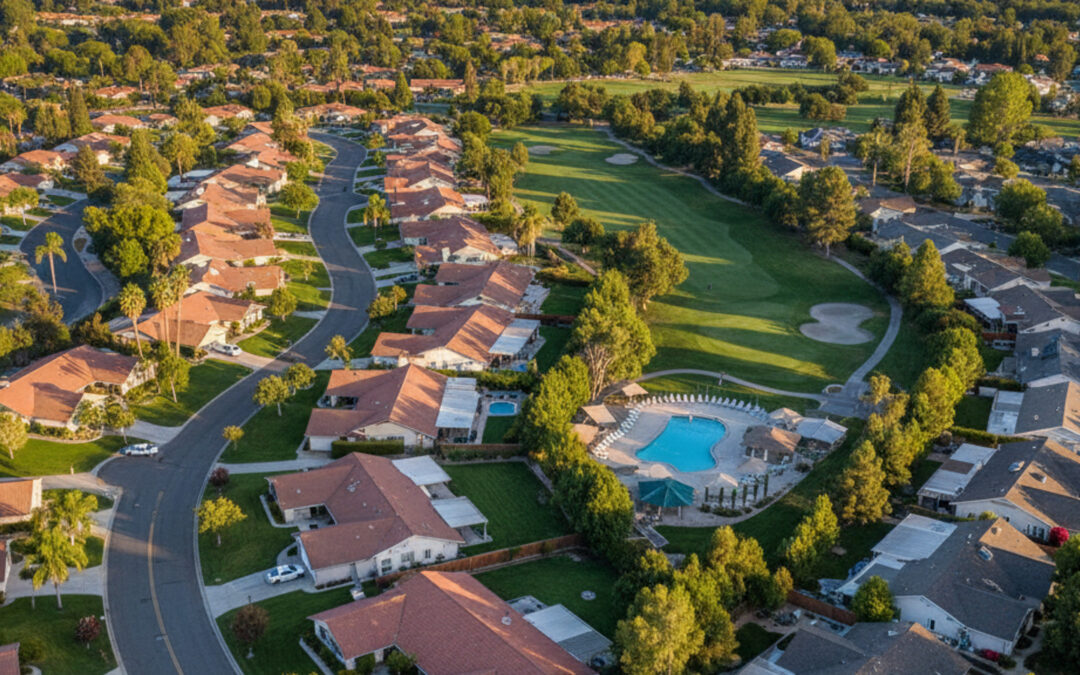
Ventura County offers a wide range of housing options, but few developments have the historical footprint of Leisure Village in Camarillo. This planned neighborhood established a foundational blueprint for 55+ communities across Southern California. Buyers looking at the local market today quickly realize that this development offers a unique blend of established infrastructure and accessible housing.
Understanding the history of Leisure Village, CA provides valuable context for anyone evaluating current property values in the area. The community has maintained its original design principles while adapting to modern real estate demands. Exploring its origins reveals exactly why these homes remain highly sought after in the 2026 market.
The Founding and Development of Leisure Village Camarillo
The concept for this massive planned community began with a vision to create a self-sustaining environment tailored specifically for older adults. Developers recognized a growing need in Southern California for housing that prioritized low-maintenance living alongside extensive recreational facilities. This foresight shaped the layout, road networks, and overall culture of the neighborhood.
From its inception, the neighborhood was legally established as an age-restricted development. It complies with State Civil Code 51.3, which requires at least one resident in a household to be 55 or older. This specific zoning has preserved the intended use of the property and maintained consistent demand among buyers looking for this specific community structure.
Original Builders and Construction Phases (1973–1984)
The original developer, Leisure Technology, broke ground on the property in 1973. They executed a highly structured building plan that spanned a 10-year period. This methodical approach allowed the builders to adjust floor plans based on early buyer feedback.
Construction was completed in 1984 after three distinct phases of development. The final scale of the housing project capped at exactly 2,136 total homes. This strict cap on development prevented overcrowding and ensured the original infrastructure could comfortably support all residents.
Evolution of Objective Amenities and Local Parks
A major factor driving interest in this community is the sheer volume of maintained facilities available to property owners. The grounds encompass roughly 185 acres of landscaped common areas. Managing a property of this size requires a dedicated board of directors and a full-time general manager to ensure everything remains in top condition.
The extensive maintenance of these shared spaces directly supports property values and justifies the monthly HOA dues. Buyers often find that the cost of replicating these facilities independently would far exceed their monthly assessments. Furthermore, the community features a comprehensive security department with guard-gated access operating 24 hours a day.
On-Site Recreation and Golf Course Access
The centerpiece of the community is the on-site 18-hole par-3 golf course, which has been a primary draw since the 1970s. Alongside the greens, the recreation center offers a year-round heated swimming pool, a fitness center, tennis courts, and bocce ball courts. These objective amenities provide residents with immediate access to daily physical activities without leaving the gates.
Beyond standard recreation, the community infrastructure includes a highly trained security staff. These security officers act as first responders for medical emergencies within the neighborhood. This integrated approach to resident support adds a tangible layer of practical value to the property.
Proximity to Camarillo Grove Park and Outdoor Spaces
While the internal amenities are vast, the geographic relationship to local outdoor attractions further enhances the location. The neighborhood sits just a short distance from Camarillo Grove Park, offering expanded access to nature within Ventura County. The scenic backdrop of the Santa Rosa Valley provides expansive views from many of the residential streets.
Local walking paths connect seamlessly into the broader regional landscape. This layout allows residents to enjoy the natural topography of Southern California right outside their front doors. The proximity to these protected green spaces prevents heavy commercial encroachment near the residential borders.
Architectural History and Property Types
The architectural intent behind this development focused entirely on ease of mobility and practical daily living. Builders committed to single-story layouts across the entire project. This strict adherence to accessible architecture makes the 1970s construction highly practical for today’s buyers who want to avoid stairs entirely.
The neighborhood features a calculated blend of attached housing styles and detached units. Original architectural constraints have been strictly enforced over the decades by the association. This enforcement maintains the visual uniformity and historical character of the community, preventing mismatched renovations that could harm neighborhood equity.
Single-Story Designs and Floor Plans
Leisure Technology designed 25 original single-story models specifically to accommodate different downsizing preferences. Buyers can choose from several distinct structural layouts based on their space requirements and budget. The available property types include:
- Duplexes sharing a single common wall.
- Triplexes and quadplexes offering efficient, attached living spaces.
- Fully detached single-family homes for maximum privacy.
Square footage across these 25 models ranges from approximately 672 square feet to over 1,850 square feet. This variety ensures that buyers can find a footprint that matches their exact needs without paying for unused space.
Historical Property Values versus 2026 Market Pricing
Contrasting the original mid-1970s purchase prices with current values demonstrates massive long-term real estate equity. In 2026, home prices in the neighborhood generally range from $450,000 to nearly $1,000,000. These figures represent highly competitive entry points for planned communities in Southern California.
Current 2026 monthly HOA dues range from roughly $600 to $850 or more, depending on the specific floor plan. These dues are comprehensive and cover the master insurance policy, exterior building maintenance, water, sewer, and trash collection. They also include Spectrum cable TV and internet service, consolidating multiple utility bills into one predictable payment.
Geographic Context within Ventura County
Camarillo occupies a highly strategic geographic position within Ventura County. The city sits comfortably between the dense urban center of Los Angeles and the coastline of the Pacific Ocean. This location provides residents with a mild, year-round climate heavily influenced by ocean breezes.
The historical relevance of the City of Camarillo cannot be overstated when discussing this large-scale housing development. Local municipal support in the 1970s facilitated the necessary infrastructure to support over 2,000 new homes. Today, the city continues to maintain excellent public services that benefit the immediate area.
Commute Times and Highway 101 Access
The community sits adjacent to Highway 101, which serves as the primary transportation artery for all of Ventura County. This immediate highway access translates to an approximate one-hour drive to Los Angeles under normal traffic conditions. It allows residents to easily reach major metropolitan hubs without living in the middle of urban congestion.
For those who prefer not to drive, regional transit options are readily available. Local bus service connects the neighborhood directly to broader city infrastructure and transit centers. This reliable public transportation network is a major asset for daily mobility.
Access to Local Healthcare and Shopping Centers
Proximity to essential medical facilities is a major consideration for buyers in this market. The neighborhood is located just minutes away from St. John’s Pleasant Valley Hospital. Having a major medical center this close meets the objective, the daily needs of residents prioritizing healthcare access.
Commercial hubs are equally accessible, featuring destinations like the Camarillo Premium Outlets and Old Town Camarillo. These nearby shopping centers offer everything from daily groceries to high-end retail. The concentration of commercial and medical services within a short radius makes the location highly functional.
Frequently Asked Questions
When was Leisure Village Camarillo built?
Construction on the community began in 1973 under the direction of Leisure Technology. The development was built in three distinct phases over a 10-year period. The final homes were officially completed in 1984.
Who was the original developer of Leisure Village?
Leisure Technology was the original builder responsible for the entire project. They designed the 185 acres of landscaped grounds and the 25 distinct floor plans. Their blueprint set a standard for 55+ communities across Southern California.
How many houses are in Leisure Village?
The neighborhood contains exactly 2,136 homes. This unit count was finalized in 1984 and has not expanded since. The strict cap ensures the on-site amenities can adequately support the population.
Why is Camarillo called Camarillo?
The city is named after Adolfo Camarillo, a prominent early landowner and rancher in the region. He inherited a massive Mexican land grant in the late 1800s and helped develop the local agricultural economy. His historical influence remains a core part of Ventura County’s identity today.