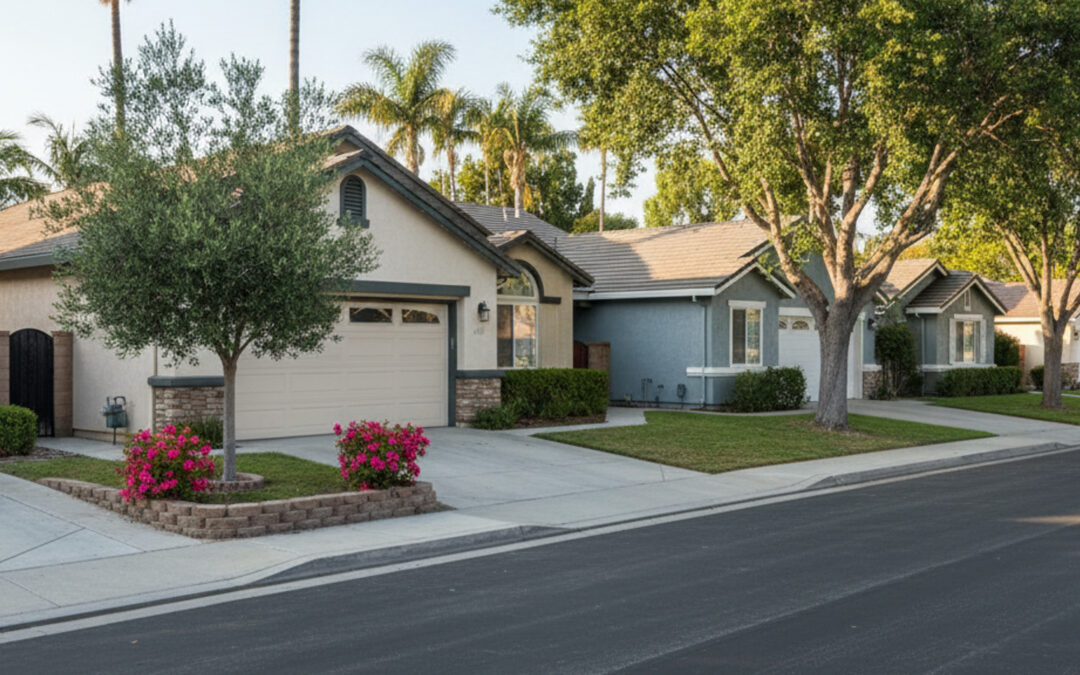
The homebuyer programs that fit Leisure Village, Camarillo’s 55+ community, are the ones built for older buyers and current owners: the Prop 19 property tax base transfer, HECM for Purchase, VA and FHA loans, and GSFA Platinum down payment assistance. If you are buying a home in Leisure Village, the right program depends on whether you own a home now, your age and the unit you choose.
Key Takeaway
Most Leisure Village buyers already own a home, so first-time programs like Dream For All and MyHome usually don’t apply. The programs that tend to fit are the Prop 19 tax base transfer, HECM for Purchase, and VA or FHA financing, with GSFA or county help if eligibility allows. Before making an offer, confirm the unit’s FHA or VA approval and run your HOA dues through the lender’s debt-to-income check.
Who This Guide Is For
Buyers 55 and older, most of them current or recent homeowners, deciding how to finance a home in Leisure Village, Camarillo.
Leisure Village Homebuyer Programs at a Glance
- First-time programs: no owned-and-occupied home in the past three years.
- Prop 19: age 55 or older, buy within two years of selling.
- FHA and VA approval: confirm for the specific unit before an offer.
- HECM for Purchase: youngest borrower 62, HUD counseling before applying.
- Dream For All: up to $150,000; Ventura income limit $207,000 (2026).
Why Most First-Time Buyer Programs Don’t Fit Leisure Village Buyers
Most state down payment assistance is limited to first-time buyers, and “first-time” is defined by recent ownership. CalHFA counts you as a first-time homebuyer if you have not owned and occupied a home in the last three years and have not lived in a home owned by your spouse in that time. If those circumstances ended more than three years ago, or you have never owned, you may apply for its first-time programs. Exceptions may apply, and a CalHFA-preferred loan officer can review your situation. The rule covers CalHFA’s down payment assistance, such as MyHome, and is waived for a standalone CalHFA first mortgage used without assistance.
For buyers who do qualify, California’s main first-time benefits are down payment and closing cost help, such as CalHFA’s MyHome deferred loan and the Dream For All shared appreciation loan.
Prop 19 Property Tax Base Transfer for Buyers 55+
An owner aged 55 or older can carry the taxable value of the home they sell to a replacement home anywhere in California, including Leisure Village, instead of being reassessed at the purchase price. The rules a buyer acts on:
- Timing: buy or build the replacement home within two years of selling your principal residence, before or after the sale.
- Value test: to transfer the base year value without adjustment, the new home can be worth no more than the old home if bought before the sale, up to 105% of its value if bought in the first year after, or 110% if bought in the second year after.
- Higher-priced home: if the new home is worth more than the allowed amount, the difference in market values is added to the transferred base year value instead of the whole home being reassessed.
- Lifetime limit: up to three transfers per person (unlimited for disaster victims).
The claim is Form BOE-19-B, Claim for Transfer of Base Year Value to Replacement Primary Residence for Persons at Least Age 55 Years. You file it with the Ventura County Assessor, which provides the form.
- Filing on time: a claim filed within three years of the replacement purchase, or before a later transfer of the home if that comes first, applies back to the purchase date.
- Filing late: a later claim can still be accepted, but relief applies only from the filing forward, so you pay tax on the full purchase value until then.
- Missing the window: buy outside the timing window above and the new home is assessed at its full purchase price.
Other Property Tax Relief for Older Owners
- Property Tax Postponement: the State Controller runs this California program for owners 62 or older (or blind or disabled) who live in the home. You need at least 40% equity and household income of $57,002 or less for the 2026-27 cycle. Postponed taxes accrue 5% simple interest a year and are secured by a lien on the home. Applications run from October 1 to February 10, and awards depend on available funding, first come, first served.
- Disabled Veterans’ Exemption: the Ventura County Assessor grants it to veterans the VA rates 100% service-connected disabled, or pays at that rate due to unemployability, and to eligible surviving spouses. File by February 15 for the full exemption; a claim filed later, before the first supplemental installment is due, gets only a partial exemption.
VA, FHA and Other Loan Options for Older Buyers
Whether these loans work depends partly on the property. An FHA loan on an attached home usually needs the project to be FHA-approved. FHA’s minimum down payment is 3.5% with a credit score of 580 or higher, or 10% with a score of 500 to 579.
For condominiums, HUD’s Single-Unit Approval can clear one unit when the project is not on HUD’s approved list. The unit and project must meet HUD criteria such as owner-occupancy, FHA concentration limits and budget reserves. Leisure Village Association describes the community as a planned-unit development governed by an elected board, rather than a condominium association. Ask your lender how it classifies the unit and which approval rules apply.
VA loans let qualifying veterans buy with no down payment and no monthly mortgage insurance. Most borrowers pay a one-time funding fee, currently 2.15% of the loan for first use with no down payment, and higher for later use or with a down payment. Veterans who receive, or are entitled to receive, VA compensation for a service-connected disability, and certain surviving spouses, are exempt from the fee.
Finding out during escrow that the unit does not qualify for your loan type can cost you time or the deal. Ask early for the association documents your lender needs to review, since slow HOA paperwork can push a financed closing past its scheduled date. If a unit cannot get FHA or VA approval, a conventional loan is the usual fallback.
HECM for Purchase (Reverse Mortgage to Buy)
A HECM for Purchase lets you buy a home with a reverse mortgage. You put down a large lump sum, often from the sale of your current home, and an FHA-insured reverse mortgage covers the rest. There are no required monthly mortgage payments, but property taxes, insurance and HOA dues must stay current, and unpaid dues or taxes can put the loan in default. The requirements:
- Age: the youngest borrower, or eligible non-borrowing spouse, on title must be at least 62. That is older than the community’s 55+ threshold, so a buyer in their late 50s cannot use one yet.
- Counseling: complete a session with a HUD-approved HECM counselor before the lender can take your application.
- Occupancy: move in as your principal residence within 60 days of closing.
- Down payment: the amount by which the price exceeds the loan’s principal limit. The principal limit is set by the youngest borrower’s age, the expected interest rate, and the lesser of the price or the FHA HECM lending limit. Younger borrowers and higher rates mean a larger down payment.
Because a HECM is FHA-insured, the unit must also pass FHA approval.
State-Level Homebuyer Financial Assistance Programs
California’s state programs are accessed through approved lenders, and each one turns on four checks:
- First-time status: some programs require it under the three-year definition above; others do not.
- Income: each program sets limits by county, and your lender applies the current Ventura County figure.
- Owner-occupancy: plan to live in the home as your primary residence.
- Property: ask the lender to confirm that a unit in a 55+ HOA community meets the program’s property and project rules.
Percentage-based assistance scales with the purchase price, so estimate it against local real estate trends for the price range you are targeting.
CalHFA Loans and the Dream For All Program
CalHFA’s Dream For All loan provides the lesser of $150,000 or 20% of the price or appraised value.
- How repayment works: it is a shared appreciation loan. When you sell, refinance or pay off the first mortgage, you repay the original amount plus a share of the home’s appreciation. That share is tied to the percentage of assistance you received, with a reduced share for lower-income borrowers.
- Who qualifies: all borrowers must be first-time homebuyers, and at least one must be first-generation. First-generation means no ownership interest in or mortgage on a U.S. home in the last seven years, and parents with no present ownership interest in a U.S. home. That rule makes it a rare fit for 55+ buyers who have owned before.
- Income limit: CalHFA listed Ventura County’s limit at $207,000 for the 2026 round and updates its limits periodically, so check the current table.
- Funding rounds: the 2026 round ran February 24 to March 16 and has closed, with no new window announced.
CalHFA’s standard first mortgages carry a 2026 loan limit of $1,035,000 in Ventura County for a one-unit home. Its MyHome Assistance Program adds a deferred-payment junior loan for down payment or closing costs. The loan is up to 3% of the price or appraised value with a CalHFA conventional loan, or half a point more with a CalHFA FHA loan. MyHome requires first-time buyer status and CalHFA income limits.
Golden State Finance Authority (GSFA) Grants
GSFA’s Platinum Program pairs down payment assistance with an FHA, VA, USDA or conventional first mortgage. Assistance runs up to 5.5% of the first mortgage amount. Optional gift funds can make up as much as 2% of that, and the rest comes as a deferred second loan at 0% with no monthly payments. The second loan is due in full when you sell or refinance, and you repay only the original amount, with no share of appreciation.
Get the repayment terms in writing from your lender. Platinum is open to first-time and repeat buyers, which makes it the state-level option most likely to fit a current or recent owner. Ask a GSFA-approved lender for the current Ventura County income limit.
Ventura County and Local Camarillo Housing Grants
Three local options apply to Camarillo addresses, and the county’s housing, homeowner and rental assistance page shows which programs are currently offered. Their published rules do not say whether a unit in a 55+ HOA community qualifies, so confirm with the administrator before you make an offer.
- My Way Home (Ventura County Community Development Corporation): down payment assistance, financial coaching and HUD-approved homebuyer education for low- and moderate-income buyers in Ventura County. Some listings cap income at 80% of area median income, with a general ceiling of up to $259,000. First-time buyer and primary residence rules apply.
- Mortgage Credit Certificate: a federal income tax credit offered in each city and unincorporated area of the county. Ventura County assigns its allocation to GSFA, with eHousingPlus as program administrator. It lowers your federal income tax rather than providing cash at closing. A participating lender can confirm current availability and income limits.
- Camarillo Workforce Housing Down Payment Assistance: applications are currently closed. When it was open, it served first-time buyers (no home owned in the past three years) earning up to 150% of area median income. It required a 660 minimum credit score and at least 3% of the price from the buyer, and it covered attached or detached homes, including condos and townhomes, within city limits.
How HOA Dues Affect Loan and Program Eligibility
Higher dues lower the loan amount you qualify for, and assistance programs cap the debt-to-income ratio those dues count toward. The CalHFA caps are:
- CalHFA government loans (FHA, VA and USDA): up to 43% under manual underwriting.
- CalHFA FHA guidance: 50% with a credit score of 700 or higher, and 45% at 640 to 699.
- CalHFA conventional loans: 50% at 700 or higher, and 45% below 700.
Ask a GSFA lender for its cap.
Factoring Dues into Your Debt-to-Income Ratio
Lenders divide your total monthly debt by your gross monthly income, and your HOA dues count in the housing payment alongside principal, interest, taxes and insurance. The association’s 2026-27 schedule sets dues at $671 to $823 a month. The dues cover exterior upkeep and some utilities, but not your annual property taxes or your own interior insurance. Leave dues out of an early estimate of how much house you can afford and you overstate your buying power.
For example, on a gross monthly income of $6,000, a 43% cap allows $2,580 in total monthly debt. Dues of $823 would use about a third of that before any mortgage payment.
Rent-to-Own and Low-Income Buying Options
A lease-to-own arrangement is hard to set up here because of the association’s leasing rules:
- Rental cap: Leisure Village caps rentals at 25% of homes, a limit the association adopted on January 3, 2022. Owners who took title after that date go on a waiting list once the cap is reached.
- Lease terms: leases must be in writing on the association’s form and run at least 30 days. The association must approve the lease before the tenancy is valid, and the owner stays responsible for dues.
- Age rule: under California Civil Code Section 51.3, at least one resident of a leased unit must be 55 or older, and the association requires proof of age.
Confirm current leasing rules with the association before relying on a lease. California has no general state rent-to-own program, and a private lease-option contract carries risk: if you cannot get a loan when the option comes due, you may be unable to complete the purchase.
Buyers with lower incomes can still buy with help from income-limited programs such as CalHFA’s loans and My Way Home. Dues weigh more against a smaller income under those debt-to-income caps. A HUD-approved housing counseling agency is the free first step for reviewing your budget and program options.
Frequently Asked Questions
Can I Buy in Leisure Village Before I Sell My Current Home?
Yes, if your lender can qualify you while you still carry your current home’s payment, or if that home is sold or under contract. Prop 19 still applies when you buy first, as long as the sale falls within its two-year window.
Can I Use Prop 19 and Down Payment Assistance on the Same Purchase?
Rarely. Prop 19 requires that you sell a home you own, while most down payment programs require that you have not owned a home within the three-year look-back. GSFA Platinum is open to repeat buyers, so it could pair with a Prop 19 transfer if you meet its other terms.
Do I Have to Take a Homebuyer Education Course to Get Down Payment Help?
Generally only if you are a first-time buyer. CalHFA requires it for first-time buyers using its programs, including MyHome. GSFA Platinum requires approved education or counseling only if all borrowers on the loan are first-time homebuyers, and your lender tells you which providers it accepts.
For CalHFA, the only accepted online course is eHome America’s 8-hour Homebuyer Education and Counseling course ($100). In-person or live virtual education from NeighborWorks America or any HUD-approved housing counseling agency also counts. Finish the course before you make an offer so it does not delay escrow.
Sources
- CalHFA: Homebuyer Borrower Information
- San Joaquin County Assessor: Base Year Value Transfer
- California State Board of Equalization: Proposition 19
- California Senior Property Tax Relief
- Ventura County Assessor: Disabled Veterans’ Exemption
- HUD: FHA Condominiums
- Leisure Village Association: Common Questions
- VA Funding Fee Exemption for Disabled Veterans
- Congressional Research Service: Reverse Mortgages (HECM)
- CalHFA: Dream For All Program Handbook
- CalHFA: Program Bulletin 2026-04
- AAGLA: First-Time Homebuying Assistance Through CalHFA
- California Mortgage Guide: 2026 Loan Limits
- CalHFA: MyHome Assistance Program
- GSFA: Platinum FHA, VA, USDA Term Sheet
- GSFA: Platinum Assist-to-Own Homebuyer Flyer
- GSFA: Platinum Conventional Term Sheet
- City of Camarillo: Housing
- Ventura County: Housing, Homeowner and Rental Assistance
- CalHFA: Conventional Loan Program Guidelines
- Leisure Village Association: HOA Information
- California Civil Code Section 51.3